KhmerRooms Journal · Siem Reap
Ta Prohm Temple
ប្រាសាទតាព្រហ្ម
A KhmerRooms guide
Angkor Park, Siem Reap
East of Angkor Thom, on the small circuit.
Early morning
Soft light, fewer buses. Green season (Jun-Sep) for moody, mossy photos.
Free for Cambodians (bring ID)
Foreign friends: same Angkor Pass that covers Angkor War & Bayon.
7:30 AM - 5:30 PM
Allow about 45 minutes to an hour.
The midday selfie scrum
Mid-morning buses swamp the famous tree. Don't touch the roots or step off the marked paths.
Some temples impress you with order. Ta Prohm does the opposite it impresses you with surrender. Massive silk-cotton and strangler-fig trees have grown straight out of the rooftops and walls, their roots pouring over the stone like frozen waterfalls, prying the blocks apart one slow millimetre a year. It is the one temple where you can actually see the jungle and the empire arm-wrestling, and for once the building is losing.
Like Bayon, Ta Prohm was built by Jayavarman VII in the late 1100s but as a Buddhist monastery and place of learning, dedicated to his mother. An old inscription found here claims that thousands of people once lived and worked within its walls, including hundreds of dancers and dozens of scholars. When the French began clearing and restoring the Angkor temples a century ago, they made one deliberate exception: Ta Prohm would be left roughly as it was found, half-strangled by the forest, as a reminder of what nature does to even the grandest human ambition. That single decision is why it feels so different from every other temple in the park.
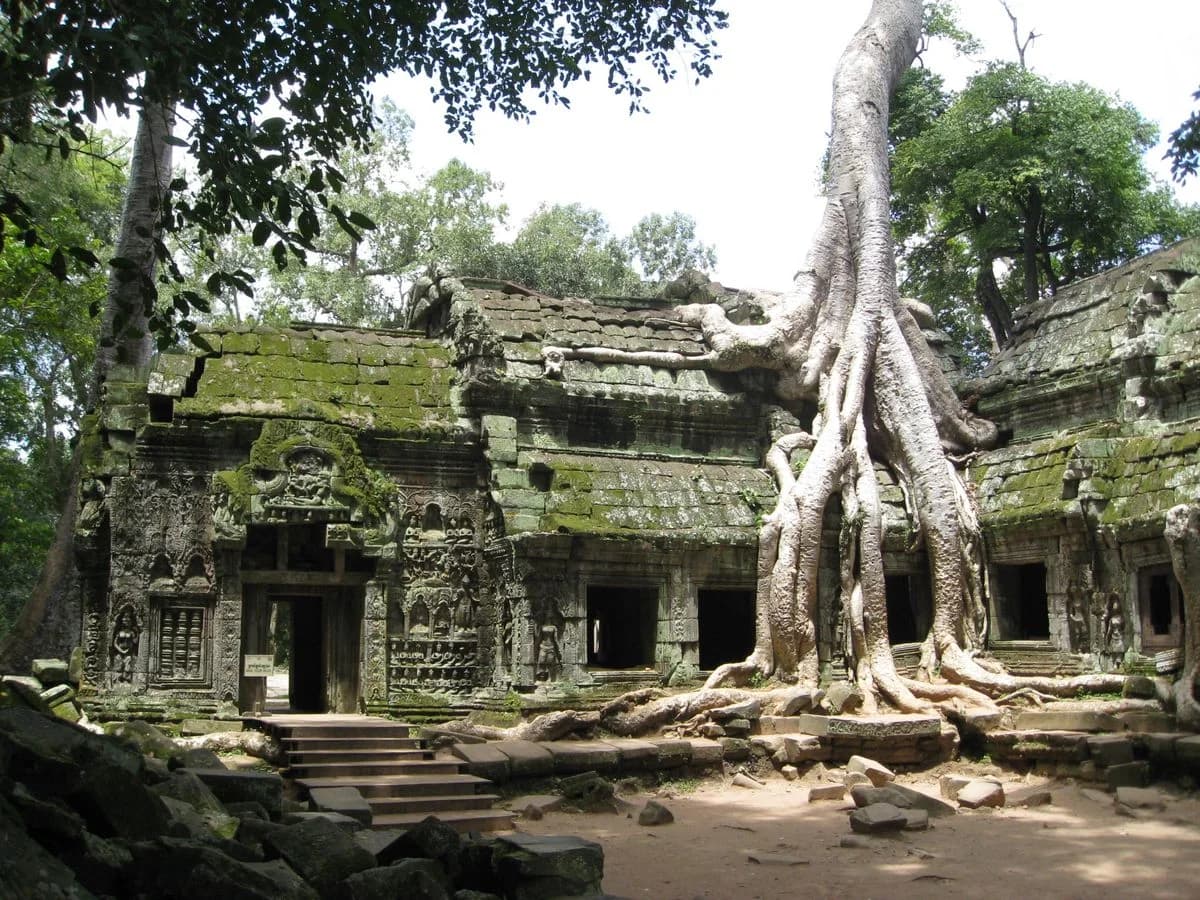
Yes, it’s the ‘Tomb Raider’ temple
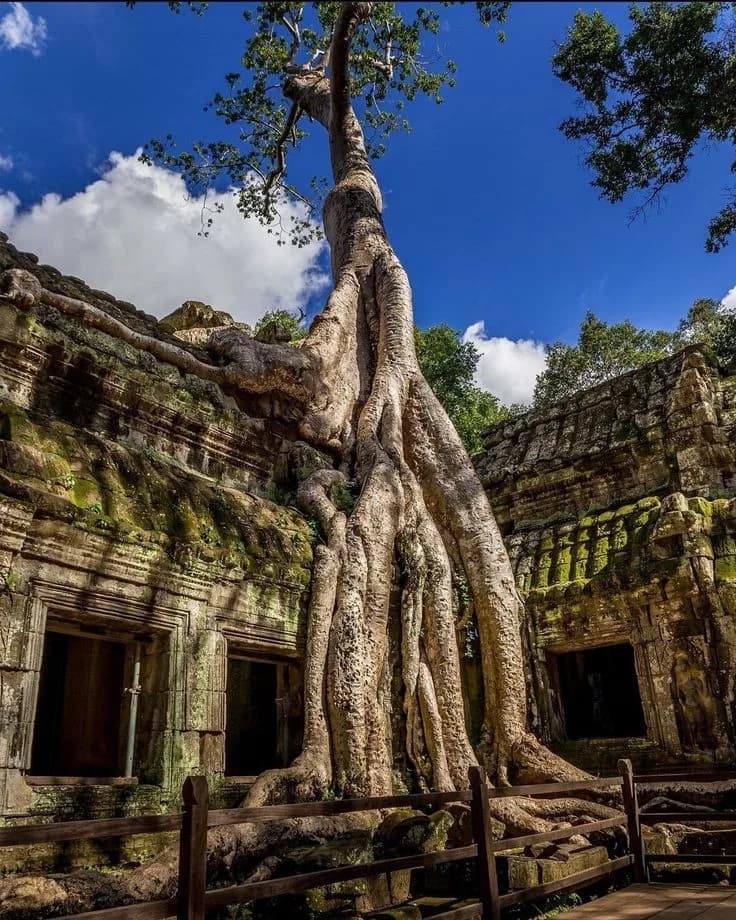
You probably already know Ta Prohm without knowing its name it’s the temple from the Tomb Raider film, and there’s one particular tree-over-doorway that now has a permanent queue of people waiting for the same photo. Take the picture if you want it, then do the smarter thing and walk away from the crowd. Step off the main thoroughfare into the side galleries and Ta Prohm turns genuinely eerie: collapsed corridors, doorways framed by roots as thick as your body, birdsong echoing off the stone, and that damp green smell of the forest reclaiming everything. Lower your voice and it can feel almost haunted, in the best way.
This is the one temple that reminds you who really owns the land. Spoiler: it isn’t us.
It is worth knowing exactly what you are looking at. The pale, smooth giants draped over the roofs are mostly silk-cotton and thitpok trees; the darker, snaking ones throttling the doorways are strangler figs. Their roots are doing two opposite things at the same time lowly cracking the temple apart, and yet binding loose blocks together so tightly that pulling a tree out could bring down the very wall it is holding up. That is the conservators’ impossible puzzle, and it is why you will spot discreet steel props and timber braces tucked into the corners: the goal was never to clear the jungle away, only to stop the slow embrace from finally winning. Once you notice it, every root looks less like decoration and more like a negotiation.
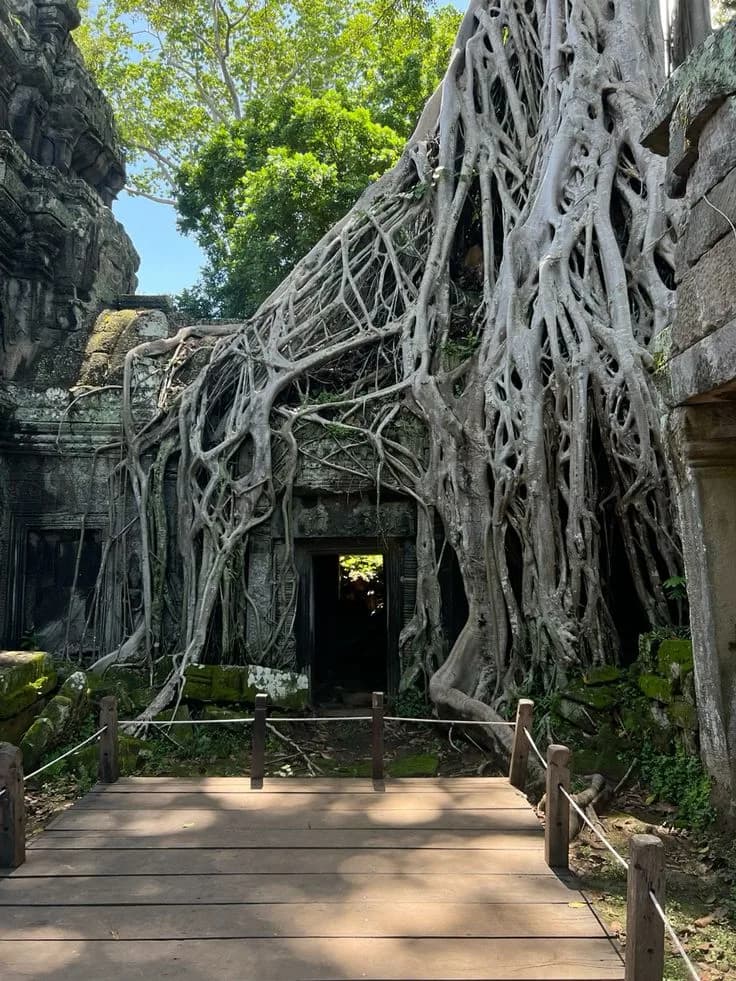
There is a tenderness to the place, too, that is easy to miss in the scramble for the famous tree. Ta Prohm was built as a Buddhist monastery and dedicated by Jayavarman VII to his mother, and the old foundation inscription lists the staggering community that once kept it alive thousands of attendants and hundreds of dancers, whole villages assigned just to supply it. Today it is silent but for birdsong and footsteps, which is its own kind of eloquence. Find a quiet courtyard away from the boardwalk, sit for a few minutes, and let the scale of what has been lost and what survives settle on you. It is the most moving temple in Angkor precisely because it never tries to be.
Go early. Ta Prohm faces east, so the morning light comes in soft and golden through the canopy, and you’ll have whole sections to yourself before the mid-morning tour buses arrive. It pairs naturally with Angkor Wat and Bayon on the classic small-circuit loop, so a single early start can give you all three of the giants before lunch. For Cambodians it’s free with your ID; for everyone else it’s on the same Angkor Pass, no separate ticket needed. A few small courtesies keep the place standing. The roots may look indestructible, but they’re part of a slow collapse that conservators are quietly working to stabilise so don’t hang off them, don’t climb the rubble, and stick to the marked walkways and boardwalks, which exist as much to protect you from falling stone as to protect the temple from you. Bring mosquito repellent in green season, wear shoes you don’t mind getting muddy, and give yourself permission to just stand in one of the quiet courtyards and listen. Ta Prohm rewards stillness more than any temple in Angkor.
More from the Journal
KhmerRooms Journal · Siem Reap
Angkor Wat
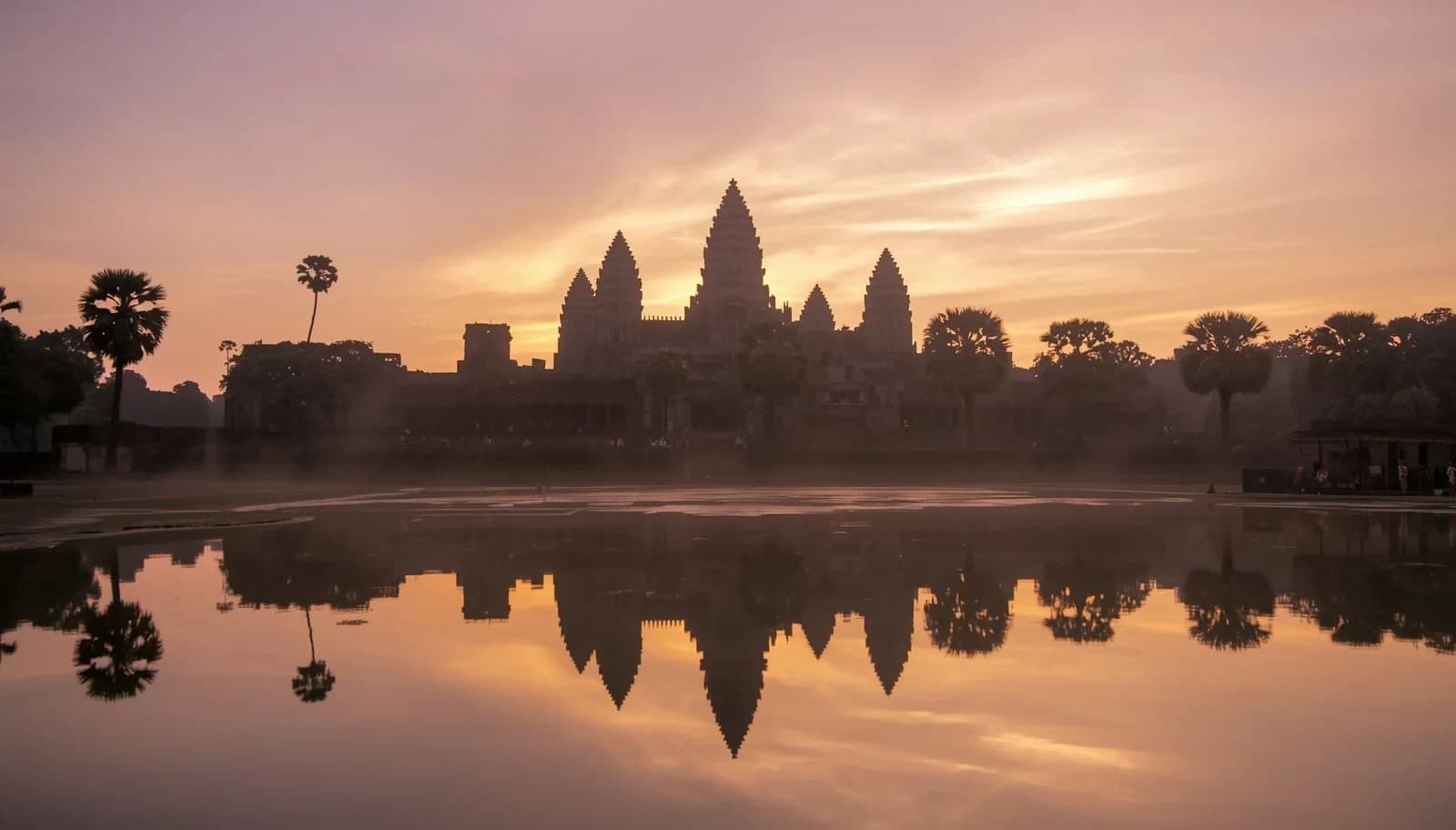
You have seen it a thousand times before you ever stand in front of it. It’s on the flag. It’s on the beer bottle, the riel note, the back of the school exercise book, the logo of half the businesses in town. Angkor Wat is so woven into being Khmer that it can start to feel like wallpaper — beautiful, familiar, easy to scroll past. And then you go at five in the morning, the sky behind it turns the colour of a ripe mango, those five stone towers appear upside-down in the water at your feet, and you understand why your great-grandparents thought gods had a hand in building it.
June 13, 2026
Read more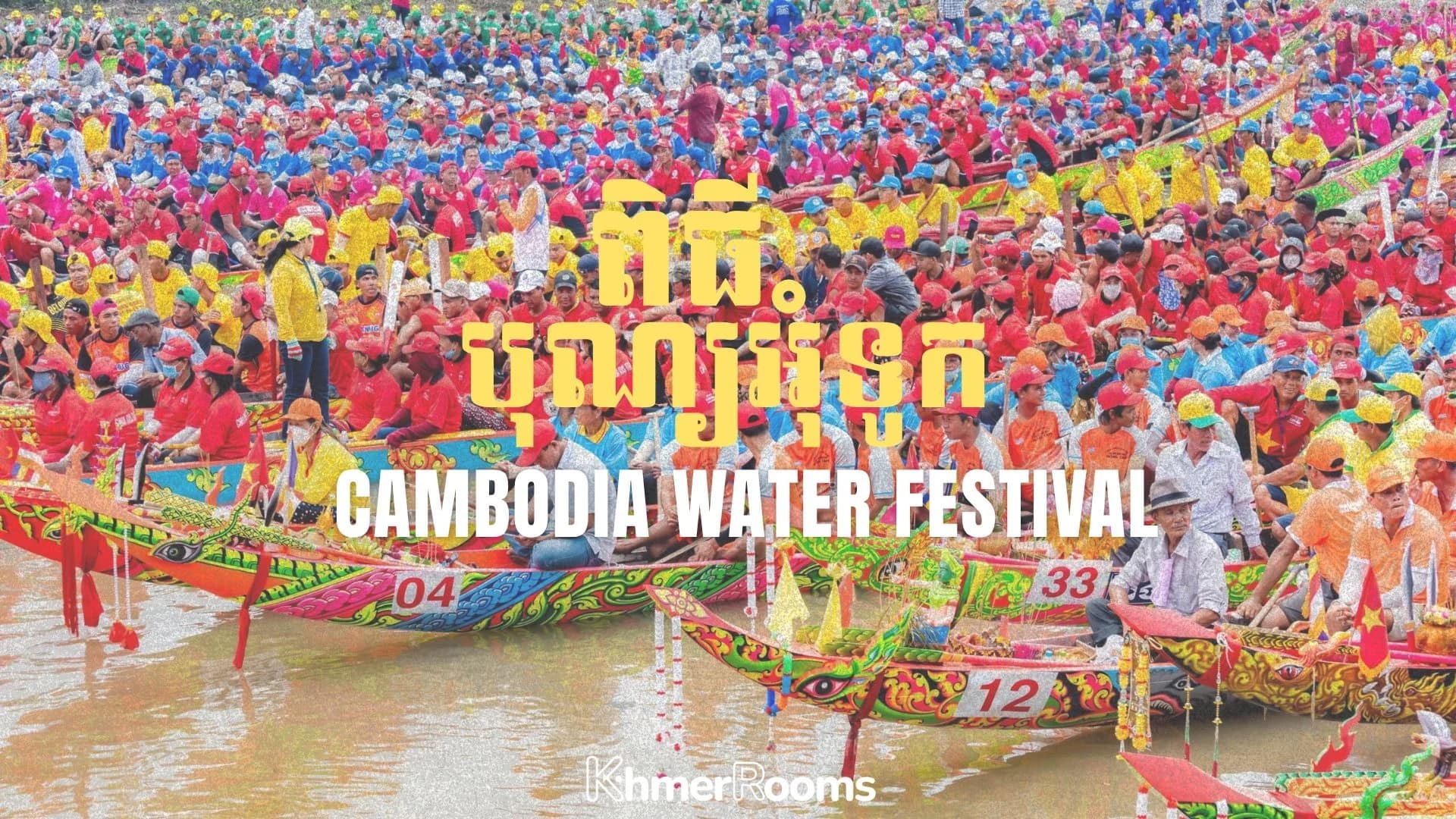
KhmerRooms Holiday
Cambodia Water Festival 2026: A Local's Guide to Bon Om Touk
Every November, the Tonlé Sap River reverses direction - a natural phenomenon that's shaped Cambodian life for centuries. Bon Om Touk celebrates that reversal, and it doubles as a commemoration of a 12th-century naval victory under King Jayavarman VII. For three days, Phnom Penh's riverfront becomes the center of the country: long, hand-carved boats race along Sisowath Quay, drums keep the rowers' rhythm, and the nights close with fireworks and moon-prayer offerings of ambok (flattened rice).
September 2, 2026
Read more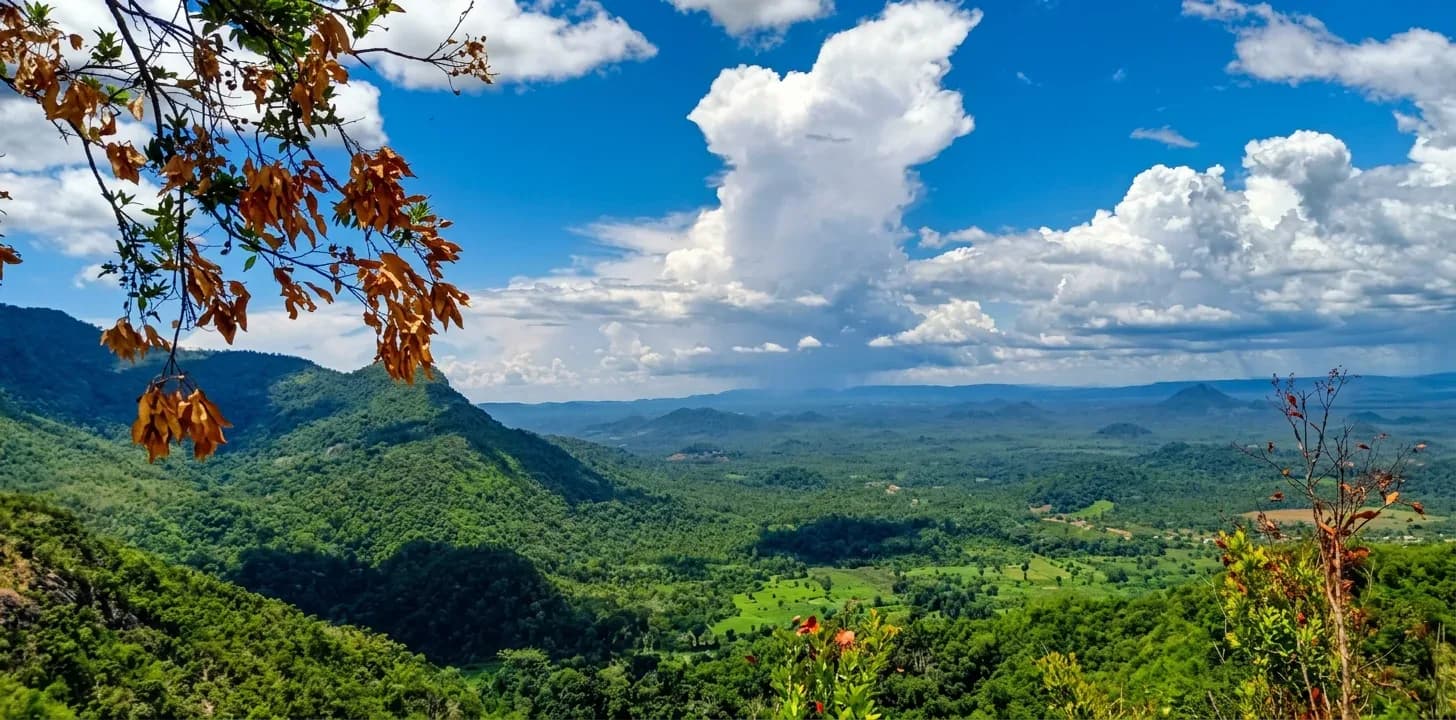
KhmerRooms Journal · Koh Kong
Phnom Toub Jeang
This is travel the way most Cambodians actually do it. You pack food rather than book a restaurant. You spread a mat in the shade rather than reserve a sun-lounger. You climb a bit for the view, you eat too much grilled meat, the kids run wild, and someone inevitably brings a speaker. There’s no checklist of “things to see” . The whole activity is being there, together, away from the heat and noise of the city. It’s cheap, it’s easy, and it’s the part of Cambodian life that almost never shows up in glossy tourism campaigns.
June 23, 2026
Read more