KhmerRooms Journal · Phnom Penh
Phnom Penh Walkstreet
មាត់ទន្លេ ភ្នំពេញ
A KhmerRooms guide
Sisowath Quay, Phnom Penh
The riverfront promenade by the Royal Palace.
Late afternoon into evening
Golden hour onward, when it cools and fills up.
Free
It’s a public riverfront - walk the whole length.
About 5–11 PM
Aerobics, food carts and families in full swing.
Midday heat & phone-snatching
Don’t stroll mid-afternoon. Keep your phone secure, and eat a block back from the tourist-front prices.
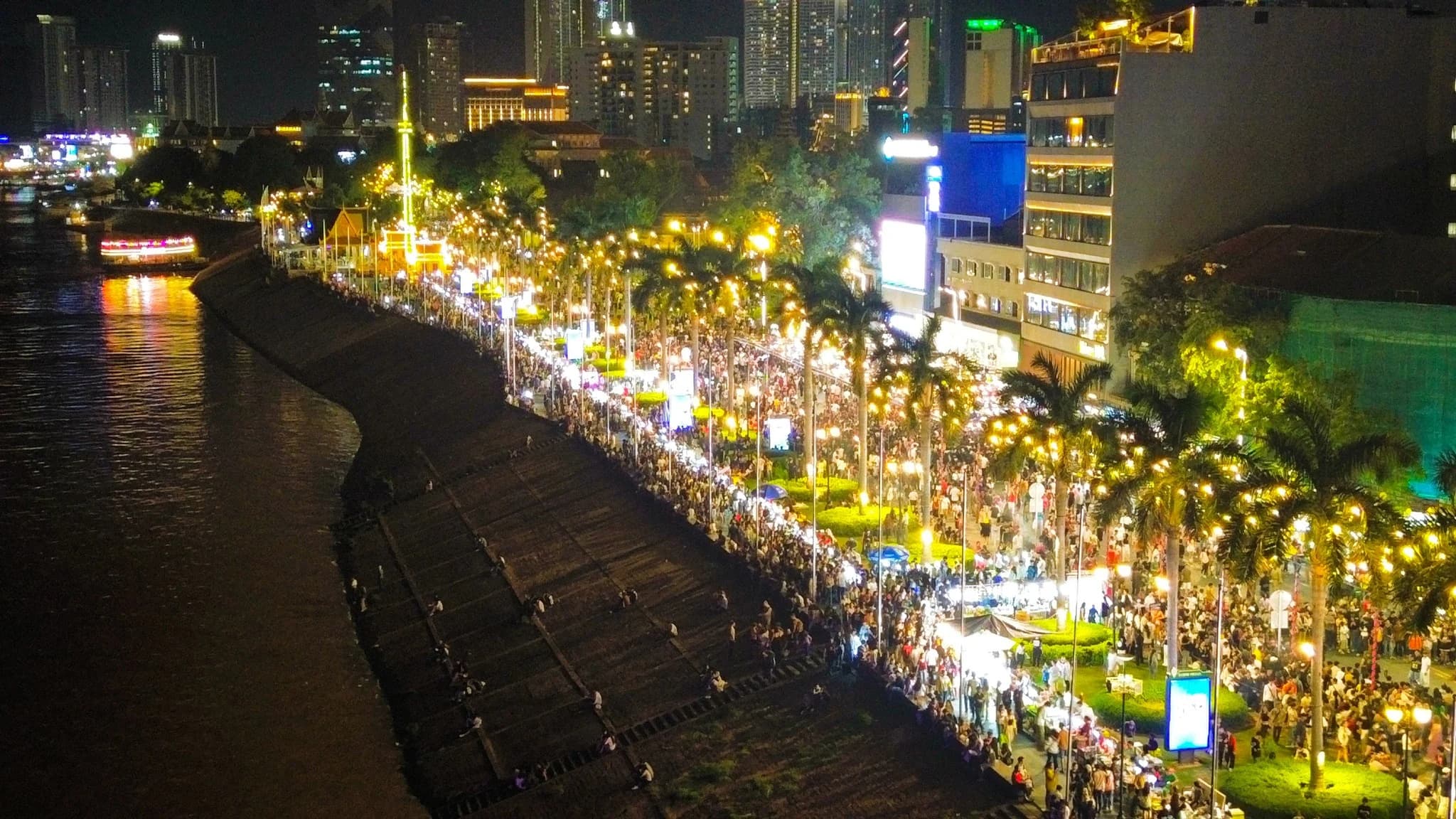
Every great river city has a place where everyone ends up in the evening, and in Phnom Penh it’s the riverside. As the sun drops and the worst of the heat lifts, Sisowath Quay turns into the capital’s living room, a long ribbon of pavement along the water where the whole city seems to show up at once to walk, eat, exercise and simply be outside together.
Geographically it’s a special spot: this is roughly where the Tonle Sap meets the Mekong, two of Asia’s great rivers braiding together right in front of you, with the golden spires of the Royal Palace glowing behind. But the magic isn’t really the view, it’s the people. Mass aerobics classes break out on the promenade, a dollar to join, music blasting, grandmothers and office workers bouncing in unison. Kids chase bubbles and fly cheap kites. Couples share fish balls and sugarcane juice. Monks pass in saffron. It’s free, it’s alive, and it’s the best people-watching in the country.
Eat like a local, a block back
The restaurants lining the very front of the quay are convenient and a little overpriced, you’re paying for the river view. The smarter, tastier move is to walk one street back into the grid behind, where the same dishes cost a fraction and the crowd is more local than tourist. Better still, eat straight off the promenade carts: grilled skewers, fresh spring rolls, num kachay, cut fruit with chilli salt, and a coconut to wash it down. Then take your snack to the railing, find a gap among the families, and watch the boats and the light on the water. That’s the evening, right there.
It costs nothing, it asks nothing of you, and it’s the truest hour of the day in Phnom Penh.
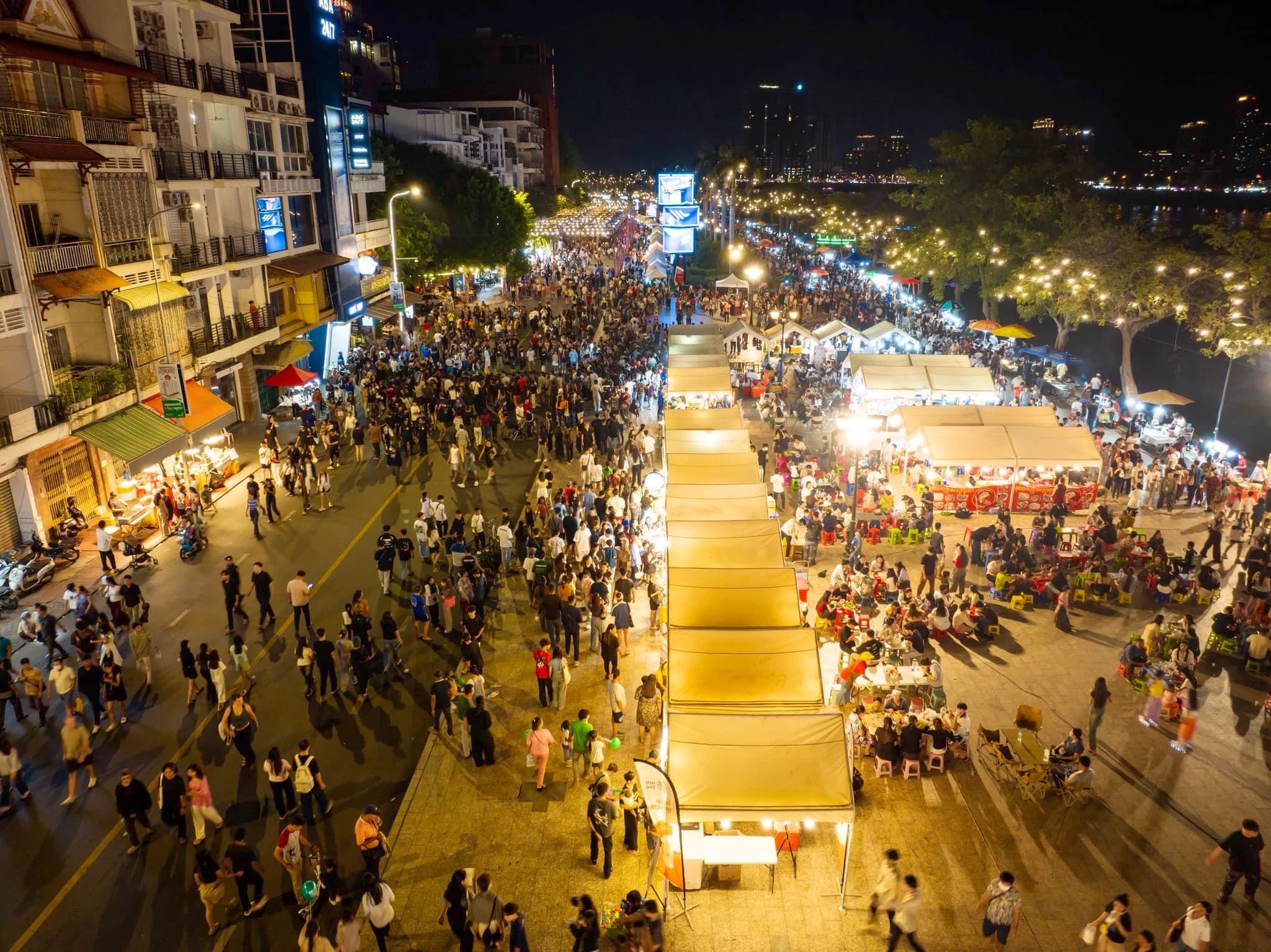
The quay has been the city’s front porch for well over a century. Named for King Sisowath, this riverfront has watched royal processions, colonial-era comings and goings, and decades of the city’s ups and downs and it still anchors Phnom Penh’s biggest celebrations. During the Water Festival, Bon Om Touk, the whole promenade becomes the beating heart of the country: vast crowds pour in to watch the longboat races, and the riverside you stroll on a quiet Tuesday turns, for a few days, into the most crowded and joyful place in Cambodia. Even on an ordinary evening, you are walking the same stretch where the city has always come to mark the good times. Stretch the evening into a proper wander and it only gets better. The blocks just behind the quay hide some of the city’s handsomest old shophouses, rooftop bars with river views, and the famous corner where the FCC has looked out over the water for generations. Drift a little north and you reach Wat Phnom, the hilltop temple the whole city is named after, lit softly at night. None of this needs a plan or a budget; it is a place you read by foot, one block at a time, letting the river pull you along until you are hungry again. Make a small loop of it. Start at the Royal Palace and end in the late afternoon, wander north past Wat Ounalom, and let the promenade carry you along the water as the light turns. On Friday to Sunday evenings the Night Market near the northern end adds food stalls, cheap clothes and woven-mat seating where you sit on the floor and share plates a fun, low-key way to end the walk. None of it needs booking, planning or money beyond what’s in your pocket. A couple of city-sense reminders. The midday riverside is just hot and empty save it for after about 4 PM. Phone-snatching from passing motorbikes does happen here, so keep your phone in your hand only when you’re using it and your bag on the inside shoulder. And if you’re visiting from out of town, this is the obvious place to base your first night in the capital: stay within walking distance of the quay and the whole evening is just a stroll out your front door.
More from the Journal
The Heritage
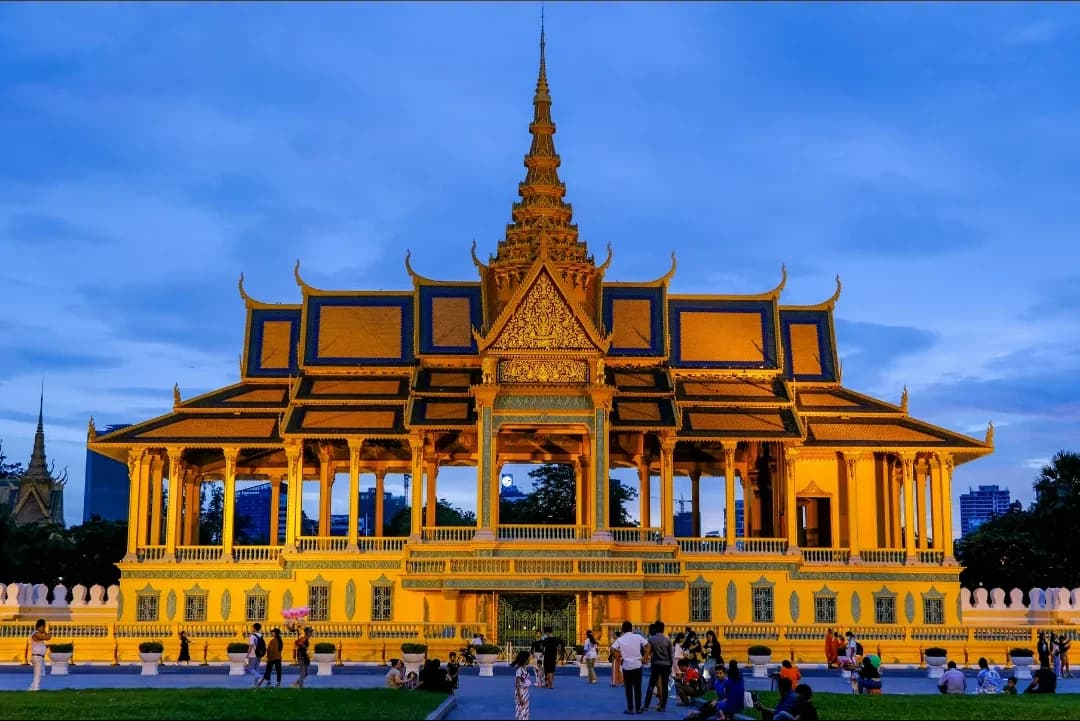
The Royal Palace
Unlike a lot of royal sites around the world that have been turned entirely into museums, the Royal Palace is still an active residence. The King of Cambodia lives and works here, which gives the whole complex a different kind of energy than your typical historical attraction. You're not just looking at the past, you're standing beside something that's still very much part of the present. Certain areas are reserved for royal use and closed to visitors, which only adds to the intrigue as you wander the grounds that are open. There's a quiet formality to the place, guards posted at intervals, manicured gardens lining the walkways, buildings kept in pristine condition.
July 6, 2026
Read more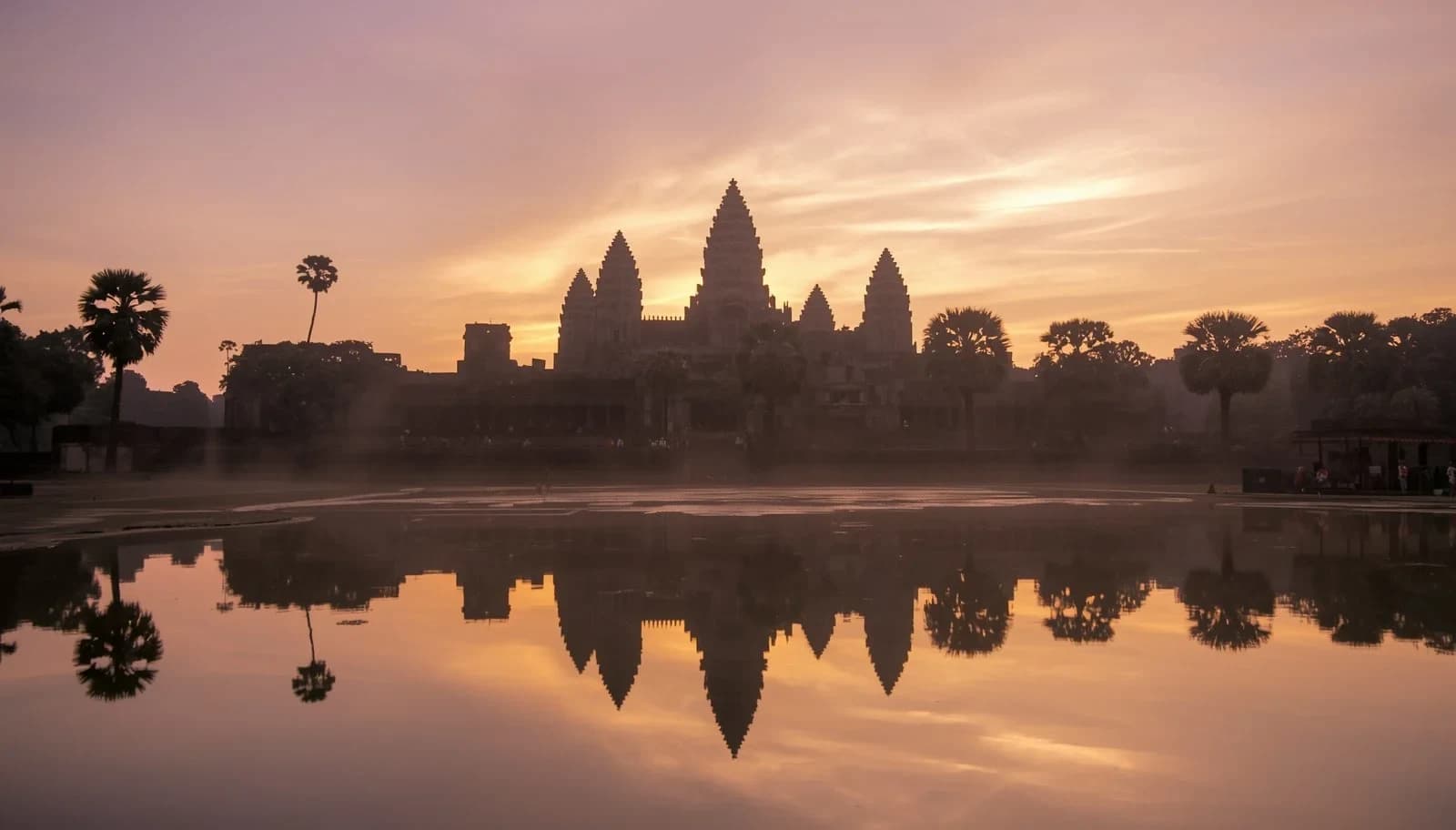
KhmerRooms Journal · Siem Reap
Angkor Wat
You have seen it a thousand times before you ever stand in front of it. It’s on the flag. It’s on the beer bottle, the riel note, the back of the school exercise book, the logo of half the businesses in town. Angkor Wat is so woven into being Khmer that it can start to feel like wallpaper — beautiful, familiar, easy to scroll past. And then you go at five in the morning, the sky behind it turns the colour of a ripe mango, those five stone towers appear upside-down in the water at your feet, and you understand why your great-grandparents thought gods had a hand in building it.
June 13, 2026
Read more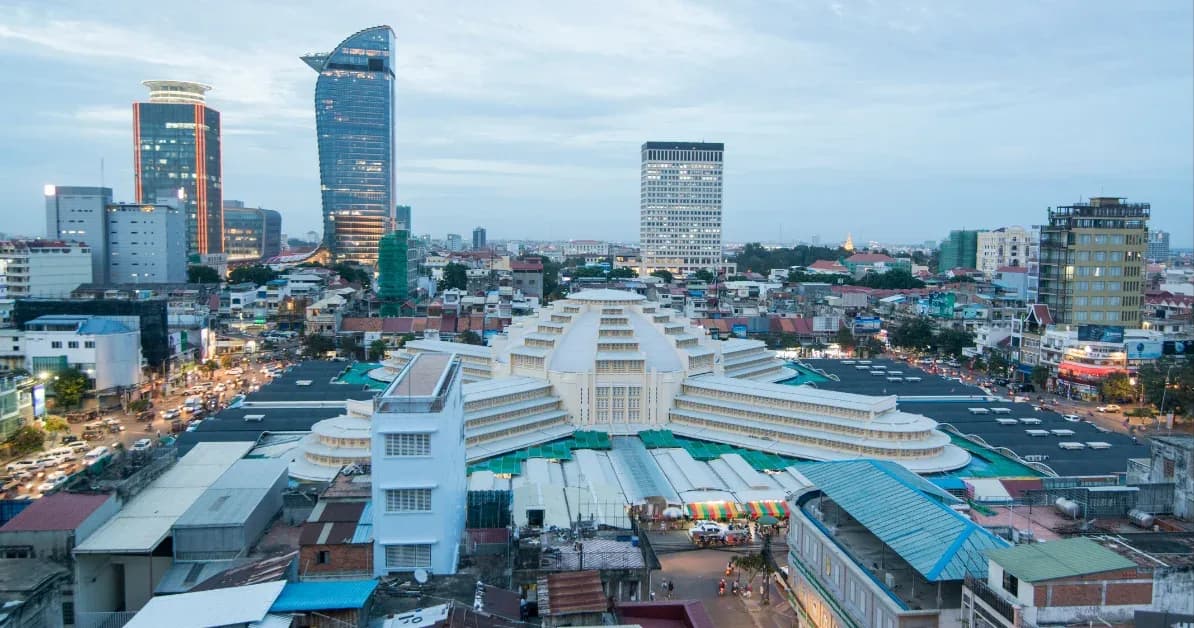
KhmerRooms Journal · Phnom Penh
Central Markets
A Cambodian market is not just shopping. It is the engine room of a community: produce trucked in from the provinces before dawn, gold weighed on tiny scales, knock-off football shirts hung next to hand-loomed silk, and somewhere in the middle of it all a woman ladling out the best noodle soup you will eat all trip. The aisles are narrow, the air is thick, the prices are a conversation rather than a number. Once you understand that rhythm, the market stops being chaotic and starts reading like the most honest tour of Cambodian daily life you can take. Here are three of Phnom Penh’s great markets: one a colonial-era landmark, one the city’s favourite treasure-hunt, and one almost nobody puts in a guidebook. Together they are the best window in the city into how Cambodians actually shop, eat and spend a morning. Take them slowly, come hungry, and bring small notes. You will spot it before anyone has to point it out: a vast butter-yellow dome with four great wings spreading off it like the arms of a star, dropped into the middle of the city as if from another planet. The locals call it Phsar Thmey the “new market” though it has been here since 1937, built by the French in glorious Art Deco when the spot was still a drained swamp. For years it was said to sit under one of the largest domes in Asia. Step inside and you understand the genius of it: the high ceilings and long horizontal openings keep the whole hall cool and breathing even when the street outside is shimmering with heat. It has earned its nickname as a living art museum.
June 30, 2026
Read more