KhmerRooms Journal · Kampot
Bokor Hill
ភ្នំបូកគោ
A KhmerRooms guide
About 40 km from Kampot city, inside Preah Monivong Bokor National Park
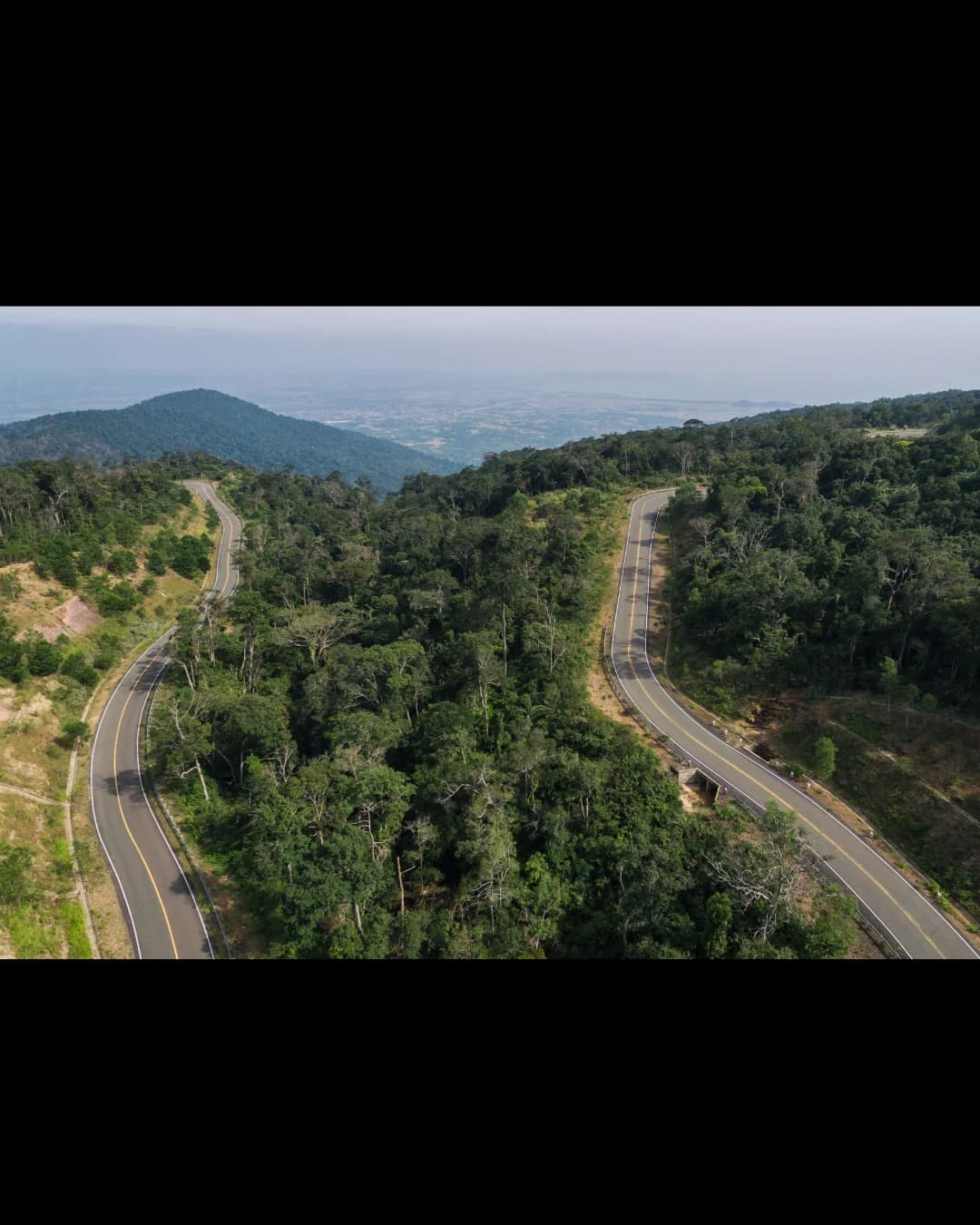
The drive takes around 1 hour via a scenic mountain road.
Best to visit between 7:00 AM and 6:00 PM
for safety and the best visibility.
Open 24/7
Driving too fast on the mountain road, especially in rainy or foggy conditions
Visiting during heavy rain (May–October), as visibility can be very limited
There's a place in southern Cambodia where the air turns cool and the clouds settle low enough to touch. That's Bokor Hill, and if you haven't been yet, let me tell you why it deserves a spot on your list.
Scenic Drive
The moment you leave Kampot town and start climbing, everything changes. The road up Bokor winds through Preah Monivong National Park in a series of sweeping curves, and with every turn the view gets a little wilder. It's a smooth, well-paved road, so you can actually enjoy the ride instead of gripping the seat in front of you. Give yourself time to stop along the way. There are viewpoints that are perfect for photos, and honestly, half the joy of Bokor is the journey up, not just what's waiting at the top.
Nature and Fresh Air
Here's the thing about Bokor that catches people off guard: Cambodia is famous for its heat, but up here, at over a thousand meters, you'll actually want a light jacket. The temperature drops, the humidity lifts, and suddenly you're breathing air that feels crisp and clean in a way that's rare anywhere in the country. The national park surrounding the plateau is one of Cambodia's most biodiverse corners, home to gibbons, civets, and if you're very lucky and very quiet, maybe even a glimpse of a clouded leopard's territory (though good luck spotting one). Waterfalls tumble through the forest nearby, and short hiking trails let you wander beneath a canopy alive with birdsong. It's the kind of place that makes you slow down without even trying. Bring a scarf, breathe deep, and let the mountain do its thing.
Temple and Spirituality
Perched near the edge of the plateau, Wat Sampov Pram, more commonly known as the Five Boats Pagoda, is one of those spots that stops conversation. Locals still visit to pray and pay respects, and there's a quiet reverence to the place that's easy to feel even if you're just passing through. Not far away, the old Black Palace, a crumbling royal residence once used by King Sihanouk, adds another layer of atmosphere. Nature has taken over parts of it, vines creeping through window frames, moss softening the concrete, and it all adds to this sense that Bokor exists somewhere between the physical world and something a little more spiritual. There's history here, but there's also a stillness that makes you want to just sit for a while and take it in.
Photography
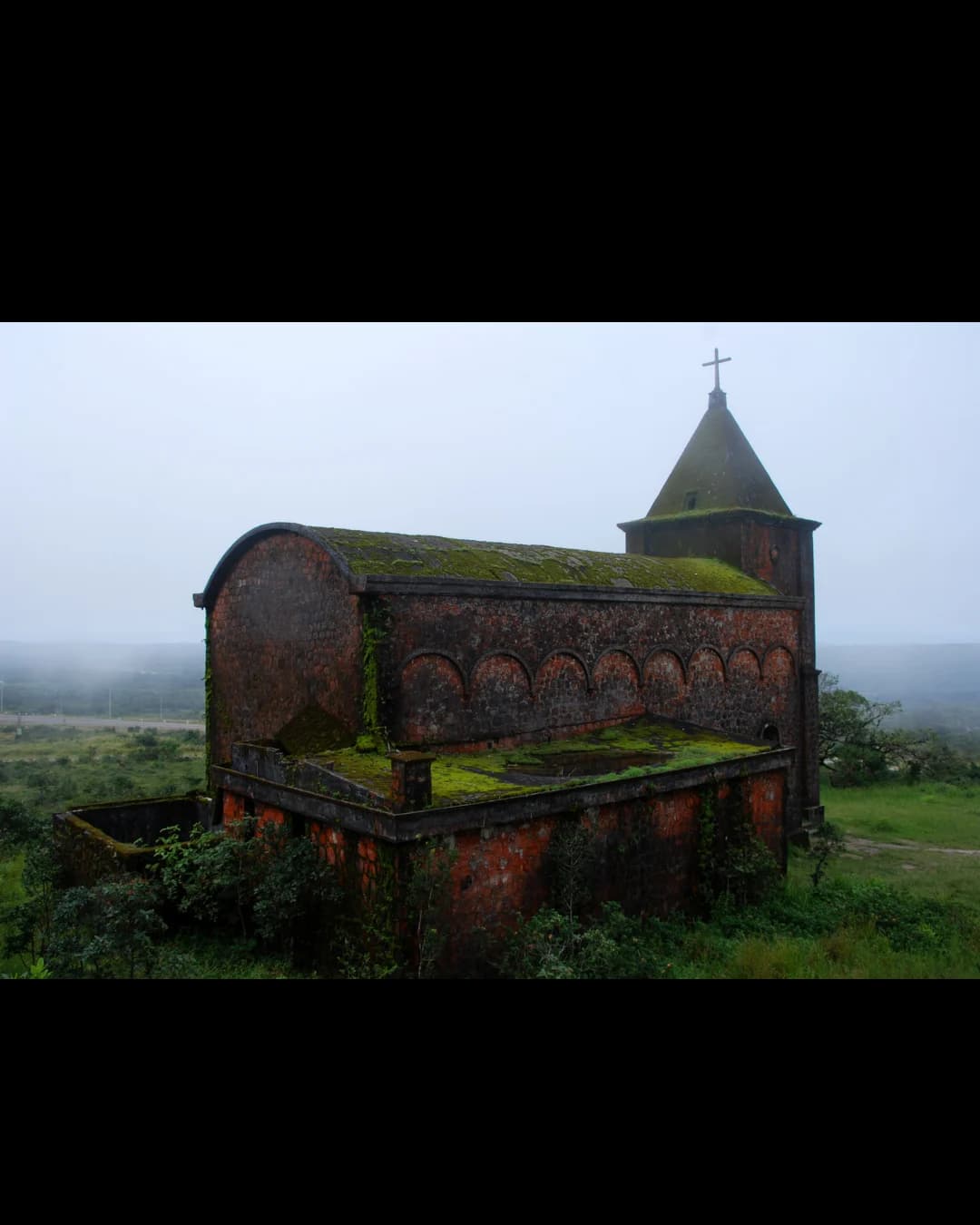
If you love photography, Bokor is basically a gift. The abandoned Bokor Palace Hotel, a grand colonial-era building left since the 1970s, is endlessly photogenic. Its facade, empty windows, and silence make for images that feel like they belong in a film. Then there's the light itself. Because clouds move through so quickly up here, you can go from bright, golden sun to soft, diffused mist within minutes, giving you completely different moods to work with in the same afternoon. Wide shots of the palace against the fog, close-ups of moss creeping over old stone, silhouettes of the temple spires cutting through cloud cover: Bokor rewards patience and a willingness to just wait for the light to shift. Even if you're only shooting on your phone, this is a place where nearly every angle turns into something worth keeping. Whether you're chasing cooler air, quiet spirituality, or just a great photo, this misty mountain plateau has a way of staying with you long after you've driven back down.
More from the Journal
KhmerRooms Journal · Phnom Penh
Central Markets
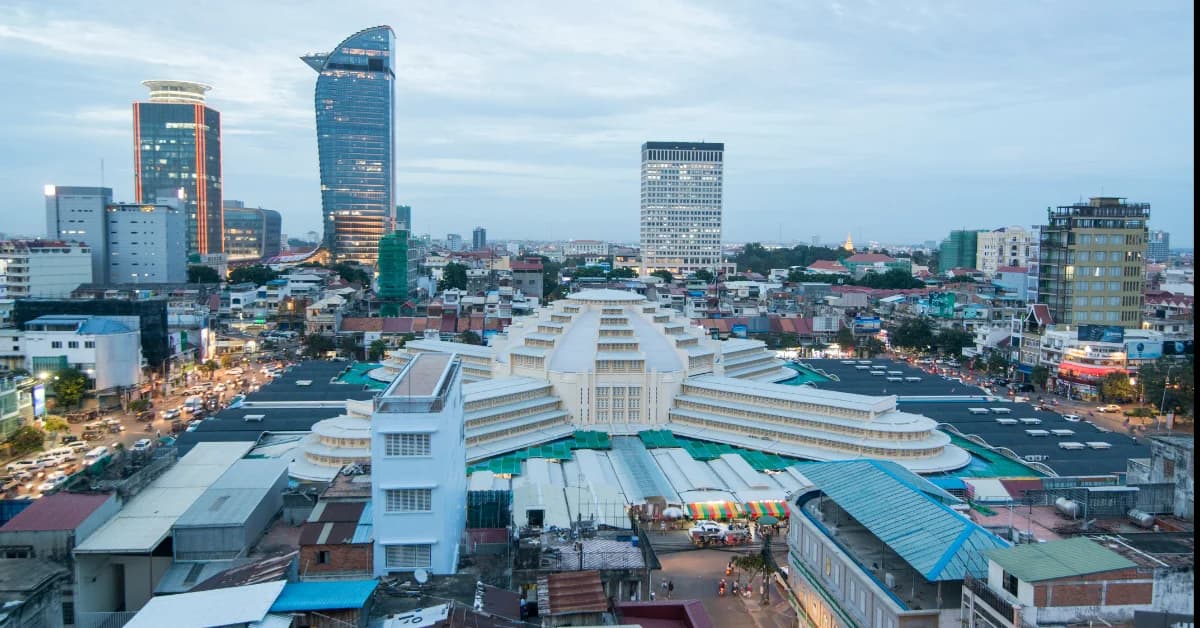
A Cambodian market is not just shopping. It is the engine room of a community: produce trucked in from the provinces before dawn, gold weighed on tiny scales, knock-off football shirts hung next to hand-loomed silk, and somewhere in the middle of it all a woman ladling out the best noodle soup you will eat all trip. The aisles are narrow, the air is thick, the prices are a conversation rather than a number. Once you understand that rhythm, the market stops being chaotic and starts reading like the most honest tour of Cambodian daily life you can take. Here are three of Phnom Penh’s great markets: one a colonial-era landmark, one the city’s favourite treasure-hunt, and one almost nobody puts in a guidebook. Together they are the best window in the city into how Cambodians actually shop, eat and spend a morning. Take them slowly, come hungry, and bring small notes. You will spot it before anyone has to point it out: a vast butter-yellow dome with four great wings spreading off it like the arms of a star, dropped into the middle of the city as if from another planet. The locals call it Phsar Thmey the “new market” though it has been here since 1937, built by the French in glorious Art Deco when the spot was still a drained swamp. For years it was said to sit under one of the largest domes in Asia. Step inside and you understand the genius of it: the high ceilings and long horizontal openings keep the whole hall cool and breathing even when the street outside is shimmering with heat. It has earned its nickname as a living art museum.
June 30, 2026
Read more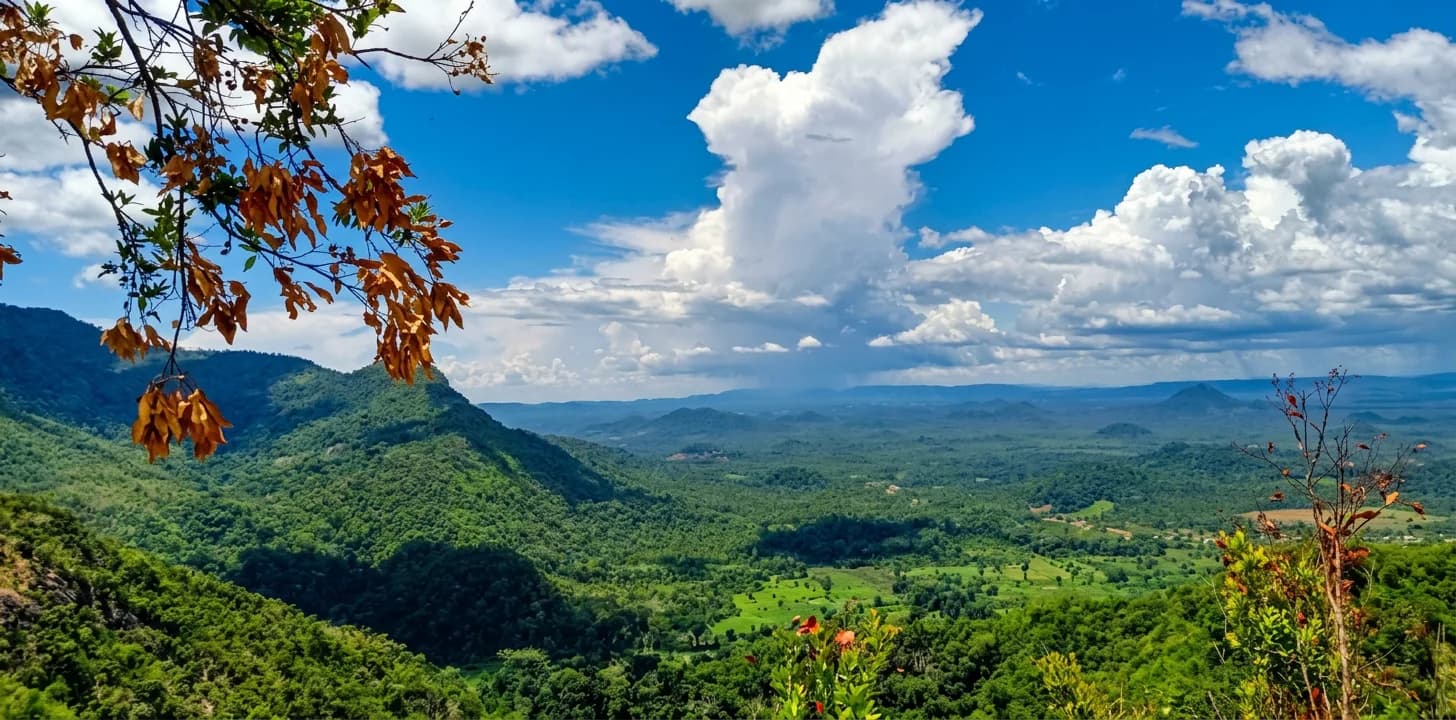
KhmerRooms Journal · Koh Kong
Phnom Toub Jeang
This is travel the way most Cambodians actually do it. You pack food rather than book a restaurant. You spread a mat in the shade rather than reserve a sun-lounger. You climb a bit for the view, you eat too much grilled meat, the kids run wild, and someone inevitably brings a speaker. There’s no checklist of “things to see” . The whole activity is being there, together, away from the heat and noise of the city. It’s cheap, it’s easy, and it’s the part of Cambodian life that almost never shows up in glossy tourism campaigns.
June 23, 2026
Read more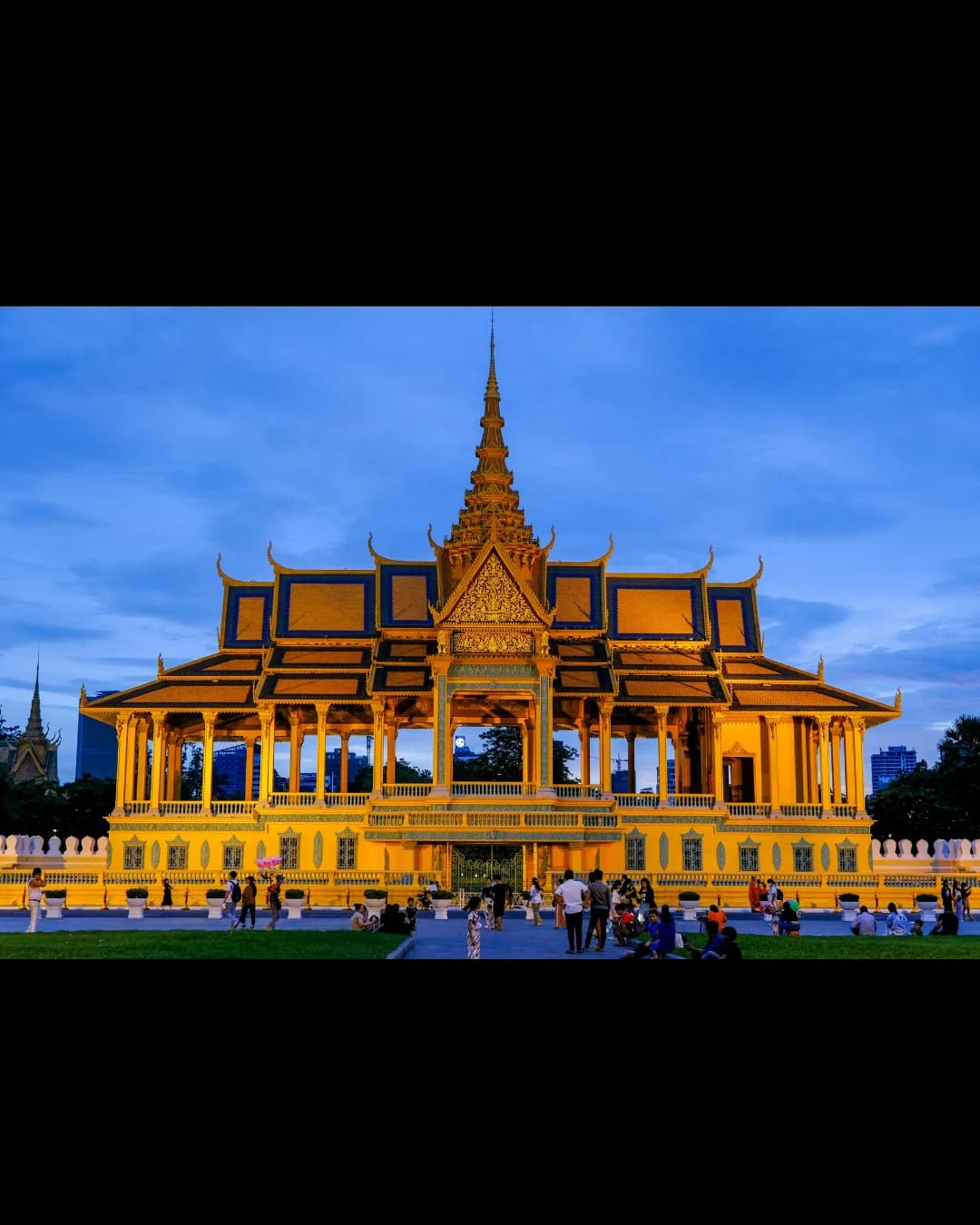
The Heritage
The Royal Palace
Unlike a lot of royal sites around the world that have been turned entirely into museums, the Royal Palace is still an active residence. The King of Cambodia lives and works here, which gives the whole complex a different kind of energy than your typical historical attraction. You're not just looking at the past, you're standing beside something that's still very much part of the present. Certain areas are reserved for royal use and closed to visitors, which only adds to the intrigue as you wander the grounds that are open. There's a quiet formality to the place, guards posted at intervals, manicured gardens lining the walkways, buildings kept in pristine condition.
July 6, 2026
Read more